I Only Need Slightly More Than $20 – Why Does Claude Jump to $100?
In the rapidly evolving landscape of AI chat tools, pricing confusion is a common pain point for users. Many users familiar with ChatGPT’s widely recognized $20 per month “Pro” subscription find themselves puzzled when exploring Anthropic’s Claude pricing structure. Specifically, the leap from Claude’s basic free tier to its “Max” plan, currently priced at $100 per month, can feel like a harsh jump. Why is there no convenient $30 or $50 tier? Why does the pricing scale so steeply, and what is behind this "claude pro to max jump"? This article will unpack that question and put Claude’s pricing in context with other leading AI offerings.
Setting the Stage: Subscription Comparison and Pricing Tier Sprawl
First, let's acknowledge a pervasive issue throughout the AI-chat and AI-content creation market today: pricing tier sprawl and naming confusion. Many companies launch with simple models but quickly introduce multiple plans with subtle differences to address distinct user needs and use cases. This proliferation of tiers can overwhelm consumers trying to select the right option.
For example, ChatGPT’s consumer subscription model is straightforward:
Plan Price (Monthly) Features Free $0 Ads in the US, GPT-3.5 access ChatGPT Plus $20 Faster response, GPT-4 accessAs of Sep 21, 2026, ChatGPT’s free tier is accessible with ads in the United States, so users need not pay to try basic features. The $20 “Plus” price point has become the industry’s de facto standard for consumer-level premium access, a level that balances affordability with substantially enhanced capabilities.
Anthropic’s Claude, however, handles its tier structure differently. Unlike OpenAI, they do not offer a mid-tier https://seo.edu.rs/blog/whats-the-best-way-to-compare-ai-tools-when-prices-are-basically-tied-11218 upgrade priced around $20 to $30 to ease users into more powerful features. Their pricing setup jumps directly from a free offering to a much steeper $100/month “Max” plan:
Plan Price (Monthly) Notes Free $0 Basic usage with limited context window Max $100 Extended context, faster throughput, priority accessThis “claude max 100 per month” price can be jarring, especially for users who want “only slightly more than $20.” Unfortunately, there is no "no mid tier claude pricing" to bridge the gap. To understand this better, we need to talk about the different economics and market positioning choices that shape these tiers.
Why No Mid-Tier? The Business and Technical Reasons Behind the Pricing Jump
One of the key factors in the pricing jump is how Claude and similar AI tools are architected and monetized.
1. Business Seat Pricing and Minimums
Claude’s subscription model is partially designed for business use cases, which often require seat minimums or multiple licenses. This means that a single individual user wanting “just a bit more” than free capabilities might find the pricing options oriented toward teams:
- Business seats often have minimum monthly purchase requirements, raising the sticker price.
- The value of features like an extended context window or faster processing is most relevant at scale, justifying a higher entry point.
To sum up, Claude is optimized for buyers with business procurement in mind — budgets that work differently from casual users paying out of pocket.
2. Technical Complexity and Resource Costs
Claude’s “Max” plan includes significant technical enhancements compared to the free tier, such as:
- Longer context windows allowing it to process and remember more information simultaneously
- Priority access for faster response times
- Higher throughput capacity, capable of supporting larger and more demanding workloads
These technical features require more computational resources, which scale the operational costs dramatically. Consequently, higher pricing helps ensure sustainable service quality while enabling further investment in development.
API Pricing Is Separate: Billed Per Token, Not by Subscription
Important to flag here — the subscription tier prices are not the full story if you intend to use Claude or OpenAI models programmatically. API access is:
- Priced separately from subscriptions;
- Billed per token processed, not by flat monthly fees;
- Typically charged based on usage volume, which allows granular cost control for developers and enterprises;
- Often includes different model versions with differing costs for tokens processed.
This means that subscribing to Claude “Max” does not grant API access by default, nor does API access confer subscription privileges like chat UI usage.
This distinction can be confusing, as many conflate “Pro” or “Max” chat tiers with API access, but these are fundamentally separate product stacks and pricing models. Always check the official pricing pages for clarity.
Contextualizing Claude's Pricing vs. Other AI Chat Tools
Comparing Claude to other offerings helps illustrate the pricing rationale better.
Tool Entry Paid Tier Price Per Month Notes ChatGPT (OpenAI) ChatGPT Plus $20 Popular baseline for premium AI chat Claude (Anthropic) Max (No mid tier) $100 No $20 or $30 tier, focused on business users Grok (X / formerly Twitter AI) Premium $30 Charges premium for real-time X data and web accessNotably, Grok, an AI tool integrated into X (formerly Twitter), charges a $30 premium to provide real-time web data and interactive functionality. This represents a different value proposition — live web data access — absent in both Claude and baseline ChatGPT models.
The standard $20 tier convergence across tools like ChatGPT “Plus” has emerged as a widely accepted consumer price point. Claude’s absence of a mid-tier package near this benchmark reflects both a business model prioritizing teams and technical investments in performance and context scaling.
What To Do If You’re Just a Slightly Over Free User?
If you’re in the camp thinking, “I only need slightly more than $20 worth of AI chat power,” here are some practical tips:

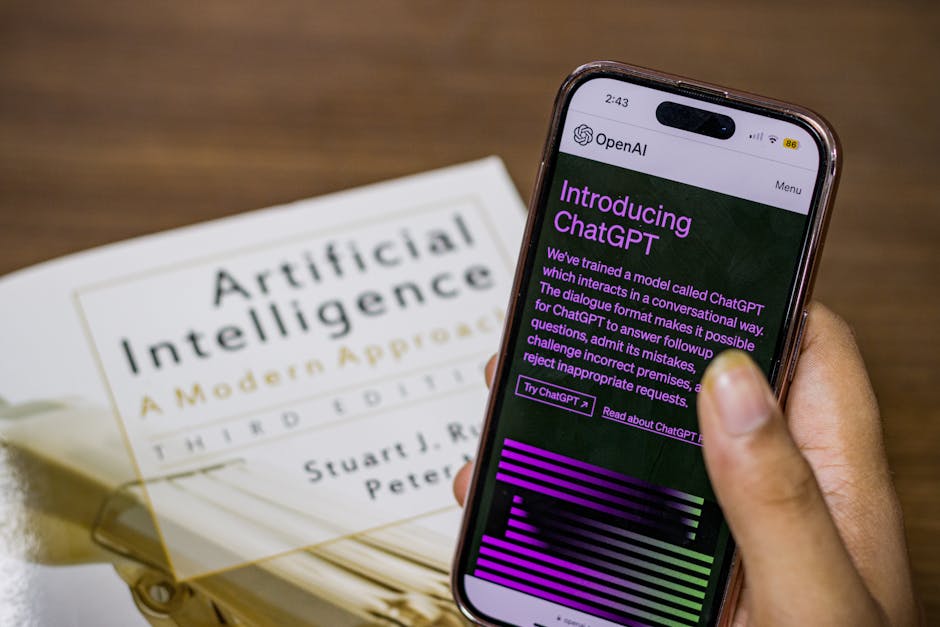
- Consider ChatGPT Plus: At $20/month, it offers GPT-4 access with robust performance for most personal and professional uses.
- Explore Grok’s $30 premium if you need live web data or real-time social media insights.
- Understand Claude’s value proposition: If you require the kind of business-grade service, more context memory, or throughput Claude Max offers, the $100 tier can be worth it, but it’s a more significant commitment.
- Check if API usage works better: For developers or power users, buying API tokens separately can optimize cost relative to your usage.
- Watch for new product announcements: AI pricing and packaging evolve rapidly; mid-tier options could emerge in the near future.
Summary: “Claude Pro to Max” Jump Explained
In summary, the “claude pro to max jump” — more precisely, the jump from free to a $100/month Helpful site “Max” plan without intermediate priced tiers — results from a combination of:
- Business-focused seat pricing and minimums that raise the entry-level price for professional use
- Technical enhancements like larger context, faster throughput, and priority access that justify a premium tier
- Separation of API pricing from chat UI subscriptions, making the cost model distinctly multifaceted
- Market positioning different from more consumer-oriented competitors who default to $20 monthly plans
Though such pricing may frustrate users who “only need slightly more than $20,” it honestly reflects operational realities and business strategy. Meanwhile, ChatGPT’s “Plus” at $20 and Grok’s $30 plan provide alternatives that better fit modest budgets and specific feature sets.
As always, check the official pricing page of each tool before making a purchase decision, because pricing and plan details may change.